



You can find people of all walks of life at a casino. Each of them are guided by their own motivations. Be that as it may, we can still group people into different categories. There are those dead set on getting a “W” at the casino, and attempting to leave the casino with more than they came with that day. Then there are those who swing for the fences – they want to hit it big come hell or high water. Still, there are the whales, who play for a sense of status and achievement, and account for the lion’s share of a casino’s income.
Despite that RTP and volatility seem like straightforward indicators of a game’s fairness, players seem to be driven by their emotions regardless. In this article, we dive into what RTP and volatility actually mean, how they affect people’s gameplay, and most importantly, what today’s gamblers value most when choosing where to place their bets.
RTP 101
This is one of the first things any savvy player is going to look at when he hears about a new game. You usually see this as a percentage, and what it stands for is the “Return to Player,” – out of all the money people deposit into the game, the percentage of all that that ends up back in the players’ pockets collectively. If a slot is 96% RTP, that means for every 1,000 dollars that the casino gets for the game, they pay out a programmed average of 960 dollars.
Sound simple? Here’s the catch: RTP is calculated over hundreds of thousands, sometimes millions, of spins. It’s not a promise of what any individual player will get back in one session – or even over the course of a week. Instead, one player may get a huge pile of cash dumped on them in winnings while another goes broke. Some people get addicted, thinking that eventually the wins will cancel out the losses according to the law of averages. That would be true if RTP were 100%, but then the casino wouldn’t make a profit.
Nevertheless, the best RTP games, chief among which is Blackjack, are what the most conservative players turn to.
Volatility
As opposed to the total amount of money paid out, this attribute states how quickly it pays out when you do win – whether it frequently spits out a few coins or if it dumps a wheelbarrow on a lucky, rare winner. While RTP takes care of the marketing, volatility is the real force shaping your experience as a player. It determines the rhythm of your session, the emotional highs and lows, and how long your bankroll might actually last.
A low volatility game gives you more wins but smaller ones, whereas the real jackpots come from those who stay patient and then finally catch a really lucky break. So these players continue to dump their money often hopelessly into a pit for long periods of time, and then suddenly they might land that pit jackpot that wipes out all their losses and then some. Or they could walk away with nothing at all. The anticipation and adrenaline are real.
Nowadays, there is a bit of a middle ground with crash games allowing users to control the level of volatility they desire in real time by testing their patience as the risk of losing grows the longer they wait to cash out. Tools like Aviator predictor online have cropped up offering users a means to claim an edge in these games too.
So What Is Dominating Player Behavior?
Players overwhelmingly prioritize excitement, novelty, and potential for huge wins over steady, statistical value. Let’s start with the numbers from some of the major industry analytics sources – companies like EveryMatrix, SoftSwiss, or Slotegrator, which aggregate casino performance data across thousands of operators.
Across the board, their reports show that high-volatility games dominate player choice, even though many of these games come with average or below-average RTPs. This trend isn’t new, but it’s become more pronounced in recent years, especially among mobile-first users.
Mobile Users
These guys, in particular, tend to favor shorter, high-impact sessions. They’re not sitting at a desktop looking for long, grindy gameplay. They want intensity – fast spins, big bonuses, dramatic visuals – and they’re willing to take on more risk for the chance at an explosive result. As a result, games that offer bonus buys, multipliers, and free-spin features tend to outperform safer, “value-based” titles.
Streaming platforms like Twitch, Kick, and YouTube have also had a major influence on this shift. Watching streamers hit massive wins on high-volatility games – even if it’s rare – creates a kind of FOMO for viewers. When a streamer turns a $1,000 bonus buy into a $50,000 payout, it doesn’t matter if the next 50 bonus buys crash and burn. That one moment of jackpot glory is what sticks in people’s minds, and it’s what drives game choice. Players want that moment for themselves, and volatility becomes a feature, not a warning.
Grinders and Thrill Seekers
The conservative players, or the “grinders”, still exist, but those are shrinking, giving way to the thrill seekers as time goes on. They often declare openly and loudly that RTP is nothing to them. Slot developers have taken note of that. Lots of titles have multiple RTP versions. allowing casinos to choose the one that suits their marketing model best. Nowadays, players can offer as little as 88% RTP. Oddly enough, these thrill-seekers aren’t in the least concerned with that. They just want to win big.
The lesson
What this all tells us is while RTP and volatility may be core parts of game design, they are not the core of player decision-making. Players respond to what they feel: excitement, frustration, anticipation, and spectacle. The data shows they’re chasing experience, not efficiency.
Emotions Prevail
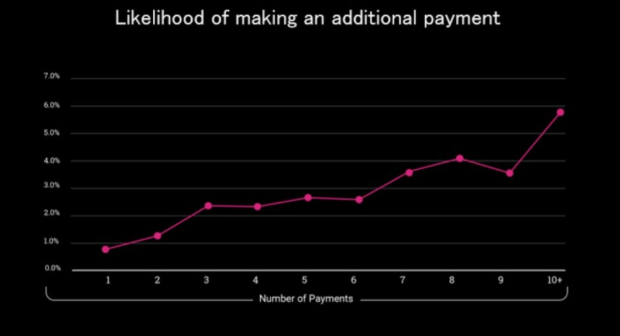
While RTP is a helpful metric, and sometimes even a deal-breaker for very informed players, it doesn’t carry the same emotional weight. A game that has a 98% RTP but feels like a slow slog won’t hold attention. This brings up another important facet of modern casino games – gamification. Players, especially the so-called whales, who account for less than 2% of players yet provide casinos the lion’s share of their profits, are intrigued by the challenge of achieving in-game objectives.
There are all kinds of loot boxes, daily and weekly challenges, as well as special skins and accessories that players can win in games. For most whales, this provides them an insatiable feeling of status that keeps them playing over and over until they win every single achievement.
In exchange for this, casinos offer bonuses galore:
- rakeback sometimes as high as 50% in the case of poker
- free comps in the form of hotel rooms, dinners, trips, and VIP event access
- dedicated customer care representatives
- custom designs for their favorite games
- prizes such as cars and electronics
A high-volatility slot that’s loaded with bonus rounds, multipliers, and the chance to win 5,000x in one spin is precisely what gets people hooked.
That’s why you’ll see games like Wanted Dead or a Wild, Money Train, Big Bass Bonanza, or The Dog House Megaways ranking at the top of casino charts month after month. These games have moderate-to-low RTPs and brutal volatility, yet they dominate. Why? Because they give players stories to tell: “I turned $0.20 into $2,000,” or “I hit three bonuses in five minutes.” Nobody brags about getting 95% of their money back over two hours of safe play.
The Psychological Side
Volatility creates peaks and valleys. It keeps players emotionally invested. The quiet buildup of dead spins followed by a big surprise payout mimics the thrill patterns of lottery wins, stock trading, even sports betting. RTP, in contrast, is static. It doesn’t produce spikes of euphoria or tension. Volatility creates stories. RTP just creates math.
