


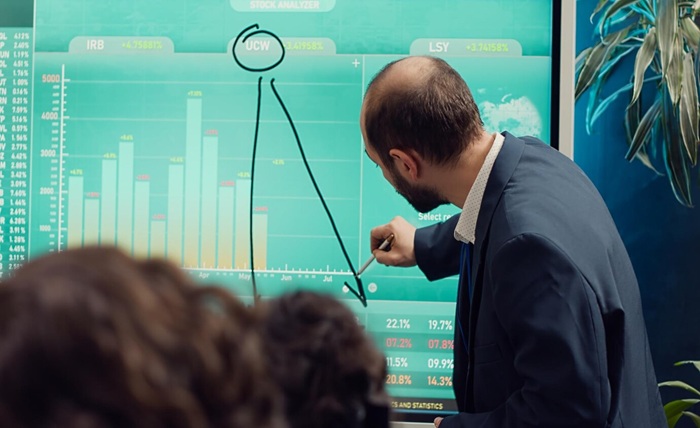
Many investors seeking diversification and profit find an alternative in forex market trading. Still, one must have a strong awareness of its fundamental ideas if one wants to navigate this large market. Emphasizing capital backing, this guide provides a basis for people just starting their journey in forex trading. It clarifies forex trading’s definition, leverage’s mechanics, and the need for risk control. You will also pick knowledge on trading strategies and the need to make use of simulated accounts. This beginner-friendly tutorial will equip you to join the world of capital-backed FX trading on a strong basis.
Understanding Forex Trading
Currency trading happens in the forex or foreign exchange market. People exchange one currency for another there. Major markets like London, New York, and Tokyo are busy with this trading done around the clock. Traders look for shifts in currency rates to earn profits. The term’ forex’ originates from ‘foreign exchange.’ It’s the world’s largest financial market, with billions traded daily. Both persons and institutions participate in currency trading.
For traders seeking additional resources and capital, forex prop firms offer an opportunity to trade with the firm’s funds, sharing profits while minimizing personal risk. Forex trading carries certain risks but can be profitable with enough knowledge and methods. Understanding thoroughly how this market works is vital for anyone thinking about entering into forex trading.
Capital-Backed Forex Trading
With sufficient funds, one can start capital-backed forex trading. This type of trading makes use of your own money or that provided by others to increase possible earnings. Forex trading can benefit from more buying power made possible by capital backing. However, it’s important to keep in mind that leveraging also raises possible losses. Success in this market calls for knowing how backing capital works together with its advantages and dangers. Regardless of whether you’re using personal money or funds from outside sources, having a solid base in the capital, trading makes it possible for more strategic and informed forex transactions.
The Leverage Mechanism
Forex trading employs leverage effectively, allowing traders to control substantial positions while investing minimal capital. Consider the scenario where you apply a 100:1 leverage. With merely $1,000, you could manage currency transactions worth $100,000. While leverage can significantly boost your profits, it equally amplifies your losses. As such, one should exercise careful use of influence. The dangers should not be undervalued even if the forex market offers tempting chances to perhaps boost earnings by leveraging. In order to succeed in trading currencies, you must first fully understand how leverage works and how it could affect your transactions.
Risk Management Importance
In forex trading, controlling risk is very important at all times. Since the forex market can be very unstable, potential profits and losses can be big. Protecting yourself against heavy losses calls for the use of risk management methods such as stop-loss orders, which automatically sell a currency when it reaches a certain price.
Another common technique is reducing, where you lower the amount of money invested in any single trade. The reason behind this is to make sure that no single loss could devastate your account. By properly managing risk, one can preserve funds and also have a more steady earning possible, therefore guiding through the ups and downs of the market.
Developing a Trading Plan
A good trader has a well-defined plan at hand that’s called a trading one. This guides what currencies to trade, when to trade, and how much money to invest, thus helping avoid hasty decisions. The plan gives an outline based on analysis but not emotions, thus aiding in effective decision-making. Having a trading plan is necessary for both risk management and consistency in profit-making. However, if it has to be effective, one has to properly create it and follow it religiously rather than straying away from it. One has to consider factors such as market conditions and personal goals while creating this plan.
Starting with Demo Accounts
To begin your journey in forex trading without putting real money at risk, start with demo accounts offered by many trading platforms. These accounts let you practice using virtual funds in a simulated market setting. It’s a wonderful way to understand how the market works, develop your trading strategy, and get acquainted with the trading interface without any financial danger.
Once you feel confident and ready to enter the real market after practicing enough on a demo account, then you can use real money and, at last, start making real trades. Starting with demo accounts is an excellent first step towards becoming a trader.
Conclusion
Jumping into capital-backed forex trading calls for thorough preparation and a strong grasp of its basic principles. Starting with how leverage increases your buying power to the importance of risk management and creating a sound trading plan, every element plays an important role in guiding you through the unpredictable market. If you put enough time into learning and practicing using demo accounts first, you’ll be better equipped to traverse the intricacies of forex trading. This offers a wonderful opportunity for earnings.
