


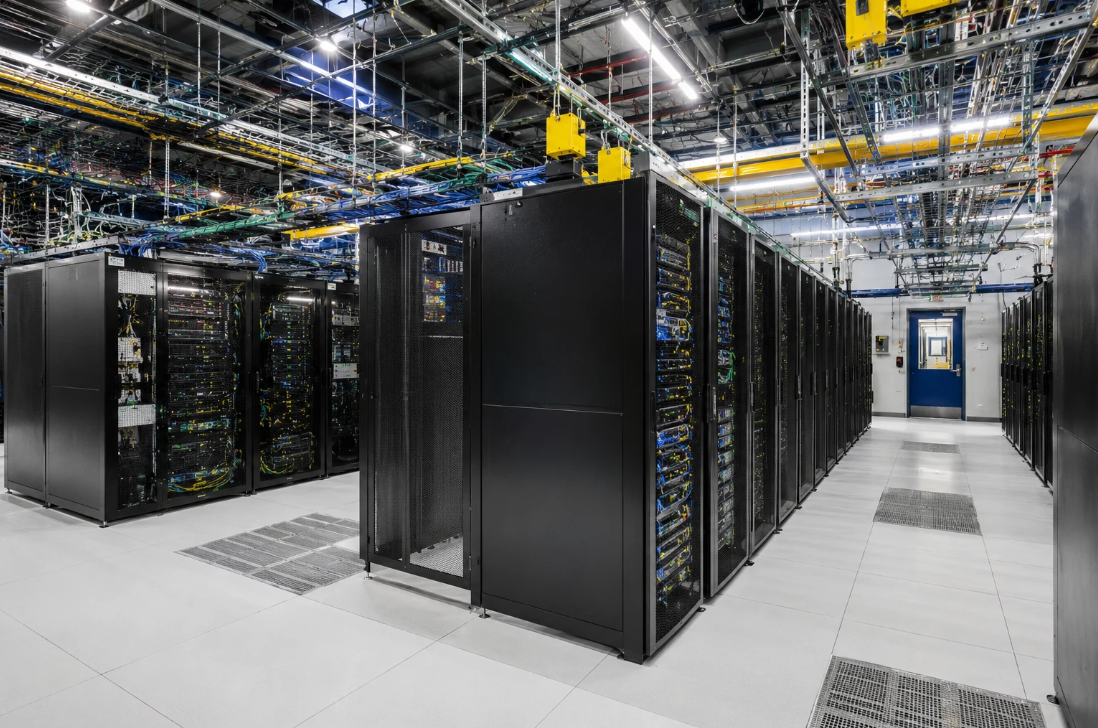
In 2026, growing data volumes, the rapid development of artificial intelligence, and increasing information security and compliance requirements are forcing businesses to find a balance between maintaining full control over their infrastructure and avoiding the high costs of building a private data center.
One of the most popular solutions remains colocation. This model allows companies to use the professional infrastructure of a Colocation Data Center to host their own equipment without the need to build and maintain a dedicated facility.
For many organizations, colocation serves as a middle ground between cloud services and a private data center, combining a high level of control with predictable operating costs.
What Is a Colocation Data Center
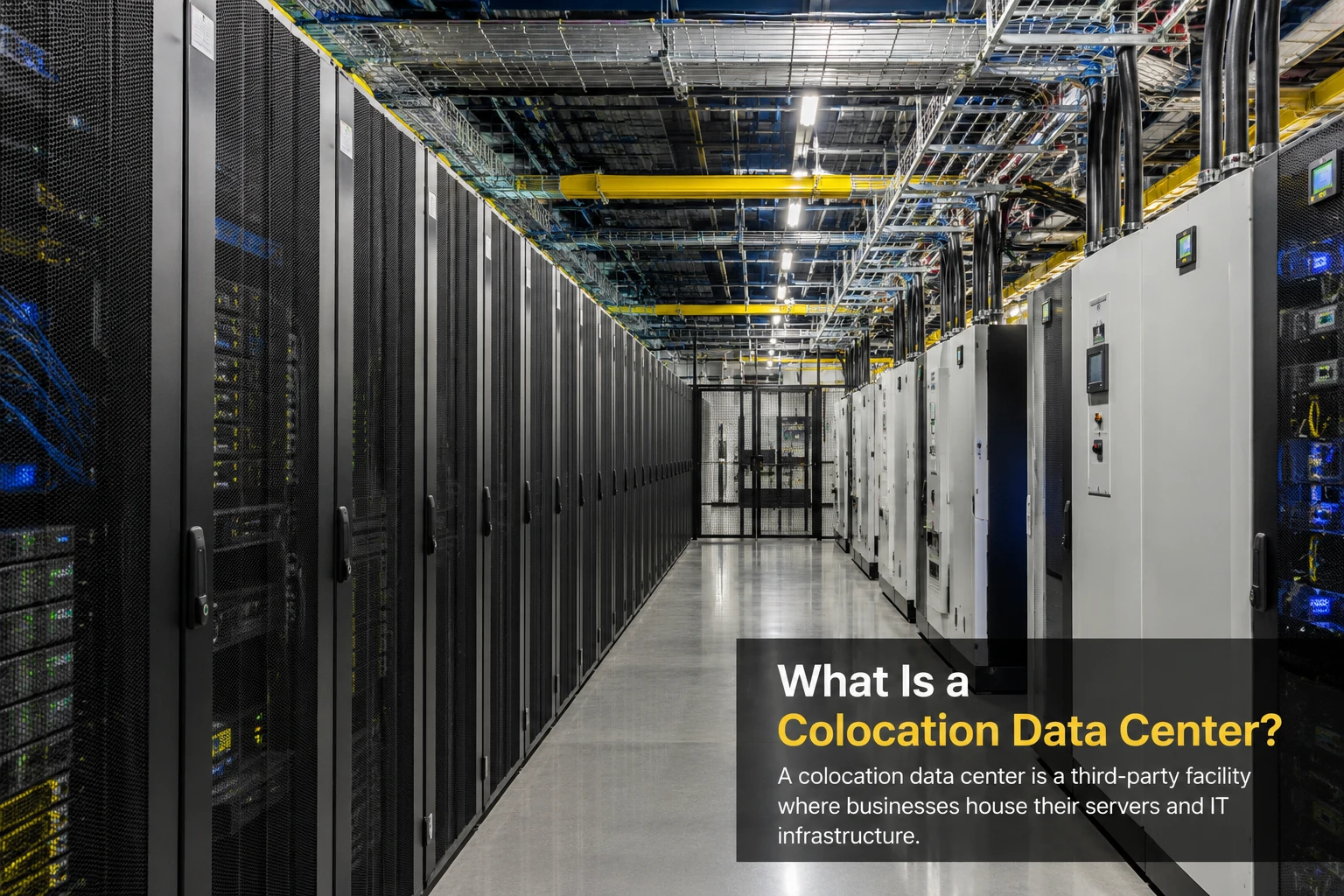
A colocation data center is a specialized facility that provides space, power, cooling, network infrastructure, and physical security for hosting customer-owned equipment.
Unlike renting virtual resources or dedicated servers, colocation allows a company to place its own servers, storage systems, routers, switches, and other hardware inside a professional data center.
In practice, the data center provides the facility and supporting infrastructure, while the customer retains full control over both the hardware and software environment.
This model enables businesses to benefit from enterprise-grade data center infrastructure without making multi-million-euro investments in building their own server facility.
How Colocation Works
The principle is straightforward.
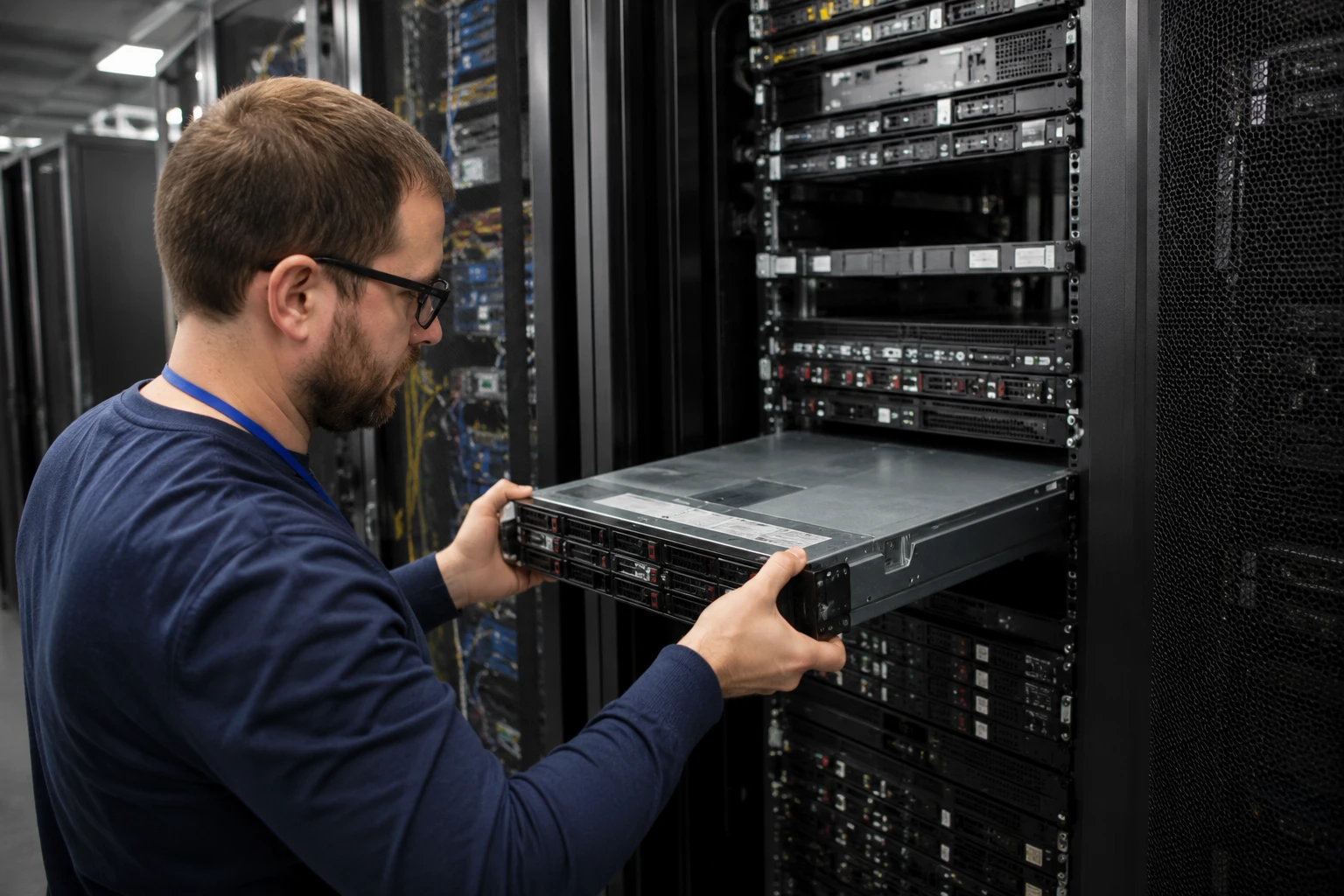
A company purchases its own equipment and installs it in the data center’s racks. Once deployed, the equipment is connected to the facility’s power supply, cooling systems, and telecommunications infrastructure.
The provider is responsible for:
- uninterrupted power supply;
- redundant power feeds;
- cooling systems;
- physical security;
- internet connectivity and access to telecom carriers;
- 24/7 facility monitoring;
- fire protection systems.
At the same time, server configuration, operating systems, applications, and business services usually remain the responsibility of the customer. If required, certain operational tasks can be delegated to the data center team through Remote Hands and Smart Hands services.
What Resources Does a Data Center Provide?
A modern colocation provider offers far more than just space for installing equipment. In most cases, customers gain access to a complete engineering ecosystem.
Power is delivered through independent, redundant power feeds. Tier III and higher data centers use UPS systems and diesel generators to keep infrastructure running even during prolonged utility power outages.
Cooling systems maintain stable temperature and humidity levels. For high-performance computing environments, specialized cooling solutions for high-density racks may also be available.
Network infrastructure typically includes access to multiple telecom carriers, internet backbones, internet exchange points (IXPs), and cloud platforms.
Additional services may include:
- Cross Connects;
- DDoS protection;
- backup services;
- cloud services;
- dedicated connectivity;
- network equipment rental;
- cybersecurity services.
Main Colocation Formats
The size of the infrastructure and business requirements directly influence the deployment format.
Units
The customer rents several rack units within a shared rack. This format is suitable for hosting one or several servers, networking devices, or small-scale storage systems.
Units are often chosen by startups, SaaS projects, and companies that are just beginning to develop their own infrastructure.
Rack
In this model, the customer receives a dedicated rack either fully or partially. This format provides a higher level of control, easier scalability, and the ability to deploy a larger amount of equipment.
Rack colocation remains the most common option among mid-sized businesses.
Cage
Large infrastructures often use a dedicated enclosed area within the data center. The customer receives a private space with an additional layer of physical security and the ability to host multiple racks.
This format is commonly used by financial institutions, telecom operators, and international enterprises.
Private Suite
The highest level of isolation involves a dedicated room within the data center. In practice, the customer receives a private mini data center inside a larger facility.
Such solutions are typically used by large corporations, government organizations, and businesses with strict security requirements.
Colocation vs Cloud
The comparison between colocation and cloud platforms has remained relevant for many years.
Cloud services allow organizations to deploy new resources quickly and scale infrastructure almost instantly. Customers pay only for the resources they consume and do not need to manage physical hardware. However, cloud costs can increase significantly under sustained high workloads.
Colocation provides a higher level of infrastructure control. The company independently selects its servers, storage systems, and networking solutions.
For projects with predictable workloads and long operational lifecycles, owning equipment hosted in a colocation facility is often more cost-effective from a total cost of ownership perspective.
This difference is particularly noticeable when using GPU servers for artificial intelligence, high-performance databases, and enterprise storage systems.
Colocation vs Dedicated Servers
Another popular alternative is dedicated servers. In a dedicated server model, the hardware belongs to the provider and is rented to the customer. This approach allows projects to be launched quickly without significant capital investment.
Colocation differs in that the equipment belongs to the company itself. This provides several advantages:
- full control over the hardware configuration;
- no restrictions on the hardware platform;
- the ability to use specialized solutions;
- greater flexibility for upgrades and modernization;
- predictable long-term operating costs.
For large-scale infrastructures, owning hardware is often the more economically justified option.
How Much Does Colocation Cost in 2026?
Pricing depends on the deployment location, power capacity, data center tier, and the selected colocation format. In European data centers, entry-level hosting for several Units typically starts at €30–100 per month.
A partial rack usually costs between €200 and €600 per month. A full Rack commonly ranges from €700 to €2,500 per month, depending on power requirements and the scope of connected services.
For Cage and Private Suite deployments, pricing is typically calculated individually and may reach tens of thousands of euros per month.
The final cost is also influenced by:
- power consumption;
- internet connectivity;
- number of IPv4 addresses;
- cross-connects;
- Remote Hands services;
- infrastructure redundancy requirements.
How to Choose a Colocation Provider
When selecting a provider, cost should not be the only consideration. Facility reliability and infrastructure quality remain the most important factors.
Before signing a contract, it is worth evaluating the following:
- data center tier;
- SLA and uptime guarantees;
- power redundancy;
- available power per rack;
- telecom carrier availability;
- 24/7 support services;
- physical security measures;
- compliance certifications;
- scalability options.
For international businesses, it is also important to consider the geographic location of the data center and local data storage regulations.
Colocation Market Trends in 2026
Over the past few years, the colocation market has continued to expand due to growing demand for computing resources.
The primary growth drivers include:
- artificial intelligence;
- machine learning;
- big data;
- cloud platforms;
- digital business transformation;
- data sovereignty requirements.
The high-density colocation segment for AI infrastructure is growing particularly rapidly. While racks with power densities of 5–10 kW were considered standard just a few years ago, many data centers today offer solutions supporting 20–60 kW per rack and beyond.
Another important growth factor is the increasing number of regulations requiring data to be stored within specific countries or regions, which is driving demand for local data centers and colocation services.
